
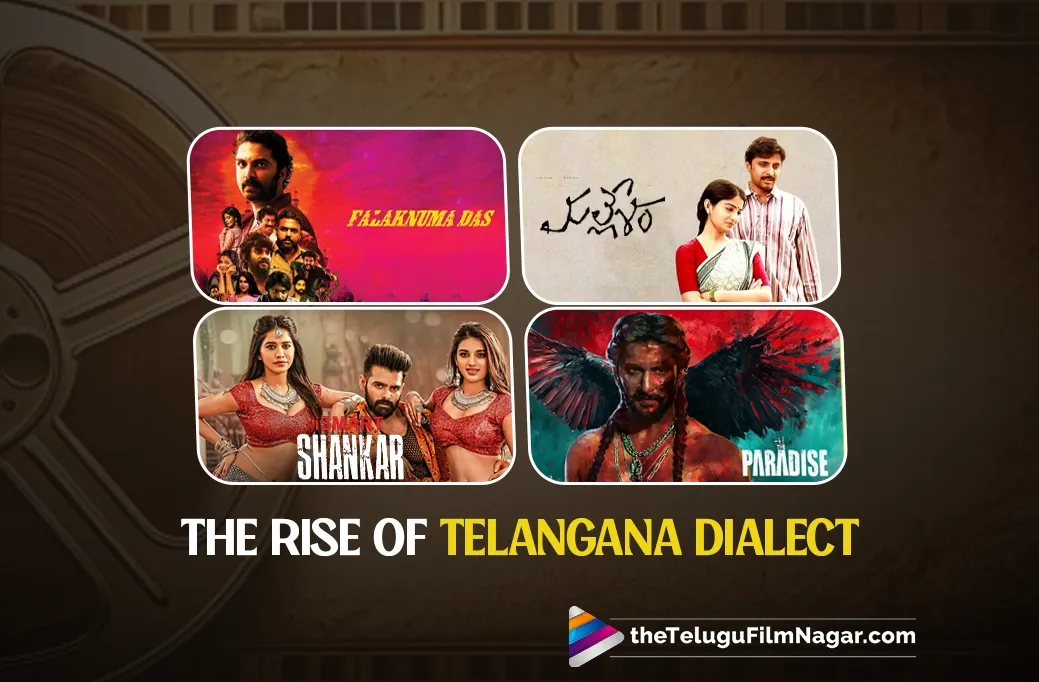
Telugu cinema has always had room for different regional voices, with filmmakers choosing the language and dialect that best suit their characters, settings and stories. In recent times, Telangana Telugu has become particularly visible in mainstream cinema, with several films allowing the dialect, local expressions and cultural details to play a central role. Rather than being an alternative to the broader, neutral form of Telugu that can be useful for stories meant to connect across regions, this has simply added another distinctive voice to the cinematic landscape.
So, why does the Telangana dialect connect so strongly with audiences today? A major reason is that it can feel rooted and lived-in. Its rhythm, expressions, slang and conversational quality can reveal something about a character's background without the film having to explain it through lengthy exposition. When the language naturally fits the character and setting, it can make the world on screen feel familiar and immediate. At the same time, the appeal is not limited to people from Telangana. A well-written regional voice can give audiences from elsewhere a window into a different way of speaking and living.
Fidaa was an important example of this shift in mainstream romance. Bhanu, played by Sai Pallavi, stood out through her natural Telangana dialect, with its rhythm, slang and expressions becoming part of her personality. The way she spoke added to the character's confidence and charm, making the dialect feel organic.
With Falaknuma Das, the dialect became closely tied to the world of the film. The Telangana Telugu and Deccani influences, along with Hyderabad's local culture and neighbourhood setting, gave the characters a distinct identity. The language helped the film feel connected to its surroundings and made its world more recognisable.
iSmart Shankar showed the commercial and mass appeal of Telangana slang. Shankar's way of speaking became part of his attitude, energy and screen personality, with the dialect adding another layer to his larger-than-life character. The Telangana dialect was also noted as one of the elements that gave the film a fresh identity within its mass-oriented presentation.
Mallesham brought that linguistic texture into a rural Telangana setting. The dialect naturally worked alongside the village surroundings, characters and everyday experiences, giving the film a strong sense of place. Rather than feeling like an added stylistic element, the language became part of the world and the people being portrayed.
Then came Balagam, where the dialect became part of a much wider cultural identity. Telangana speech sits naturally alongside village life, family relationships, customs, rituals and local traditions. The language is therefore not the only marker of identity, but one of several details that make the film feel deeply rooted in its setting.
The Paradise now takes this Telangana-rooted sensibility into a larger cinematic world. Director Srikanth Odela has said the film combines real incidents, characters and fiction, with several elements drawn from his childhood and experiences in Telangana. The revolutionary aspects and some characters were inspired by the Godavarikhani region, while incidents from between the Adilabad and Godavarikhani regions also became references for the story. His time around the Secunderabad railway quarters further influenced the world he created. This makes the film's rootedness about more than just dialect or slang. The places, people, memories and experiences behind the story contribute to its sense of being lived-in, giving The Paradise a distinctly Telangana texture while building a much larger cinematic world.
What makes this evolution interesting is that Telugu cinema does not have to choose one way of speaking. Neutral Telugu remains a useful cinematic approach for stories that call for a broader linguistic reach, while Telangana, Rayalaseema and other regional varieties can give specific characters and worlds their own texture. The growing presence of these voices simply means there is more room for different kinds of Telugu storytelling.
That may be one of the reasons the Telangana dialect has found such a strong connection with audiences. It is not only about sounding different. When used naturally, it can make a character, relationship or setting feel rooted and lived-in. Telangana dialect has become an increasingly visible part of that larger diversity, adding another layer to the way Telugu cinema represents its people and places.