
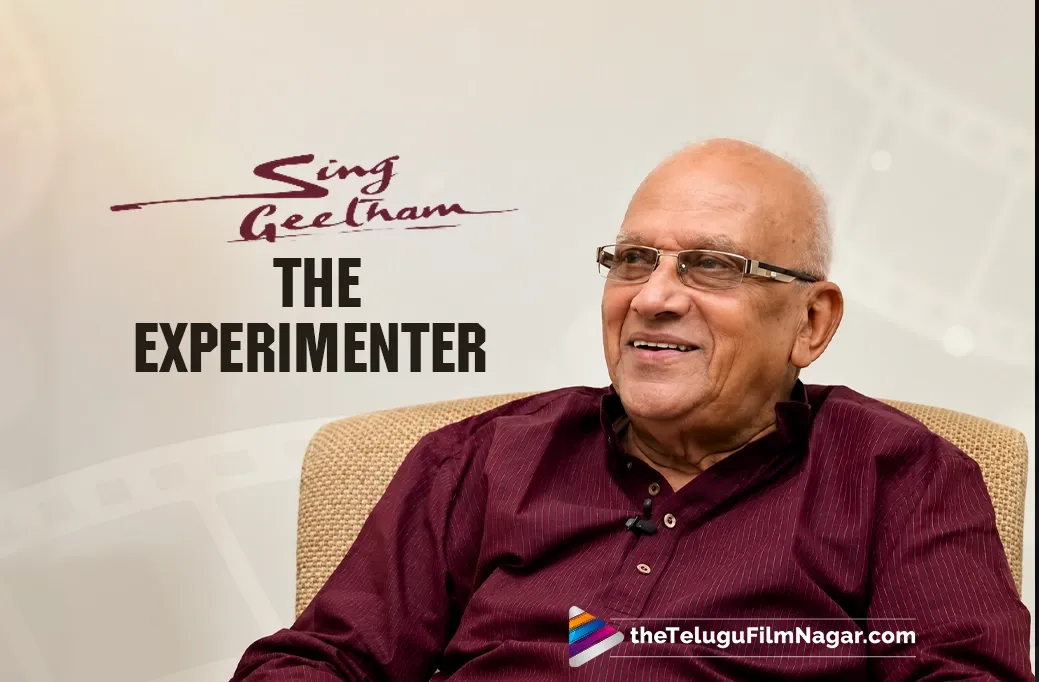
Singeetham Srinivasa Rao turns 95 today, September 21, and his career stands as a rare example of a filmmaker who never allowed age, commercial expectations or even his own past successes to define his cinema. With a career spanning several decades, multiple languages and a wide range of genres, Singeetham built his identity around one quality above everything else. The willingness to try something he had never done before.
His filmmaking journey began with a long learning phase. Singeetham worked as an assistant to the legendary K. V. Reddy, spending more than two decades in the direction department. That experience exposed him to a filmmaking culture where fresh ideas were actively encouraged. He has recalled how even story discussions around classics such as Mayabazar involved looking for ideas that had not been attempted before. That mindset eventually became the foundation of his own career.
His directorial debut Neethi Nijayithi in 1972 itself reflected the kind of cinema he wanted to make. The film earned appreciation from sections of the press and intellectual circles but failed at the box office, giving him an early lesson that critical appreciation and public acceptance do not always arrive together. Yet, instead of moving towards a safer formula, Singeetham continued experimenting.
That diversity became the defining feature of his filmography. He moved between social dramas, comedy, fantasy, romance, historical stories, animation and science fiction, while also working across Telugu, Tamil, Kannada, Hindi and English cinema. Mayuri, Pushpaka Vimanam, Apoorva Sagodharargal, Michael Madana Kama Rajan, Aditya 369 and Bhairava Dweepam are completely different films, yet each carries his interest in finding an unusual way to tell a story.
His approach to actors was equally individualistic. Singeetham has explained that he looked for the unique quality in performers such as Kamal Haasan, Balakrishna and Rajkumar and tried to bring out that individuality instead of forcing them into the same mould.
Perhaps the most remarkable part of Singeetham's journey is that experimentation never became something he associated only with his younger years. He continued exploring animation and new filmmaking technology even in his later decades.
His latest film, Sing Geetham, reflects that same instinct to experiment. Conceived as a musical drama, the film takes an unusual approach to storytelling, with music becoming an integral part of the narrative rather than simply serving as separate song sequences. Set in the fictional village of Kuberapuram, the story uses this musical format to explore its characters and conflict in a way that is distinctly different from conventional cinema. Coming after a career that has already seen him attempt a dialogue-free film with Pushpaka Vimanam, Sing Geetham feels like another extension of Singeetham Srinivasa Rao’s belief that there is always a new way to tell a story.