
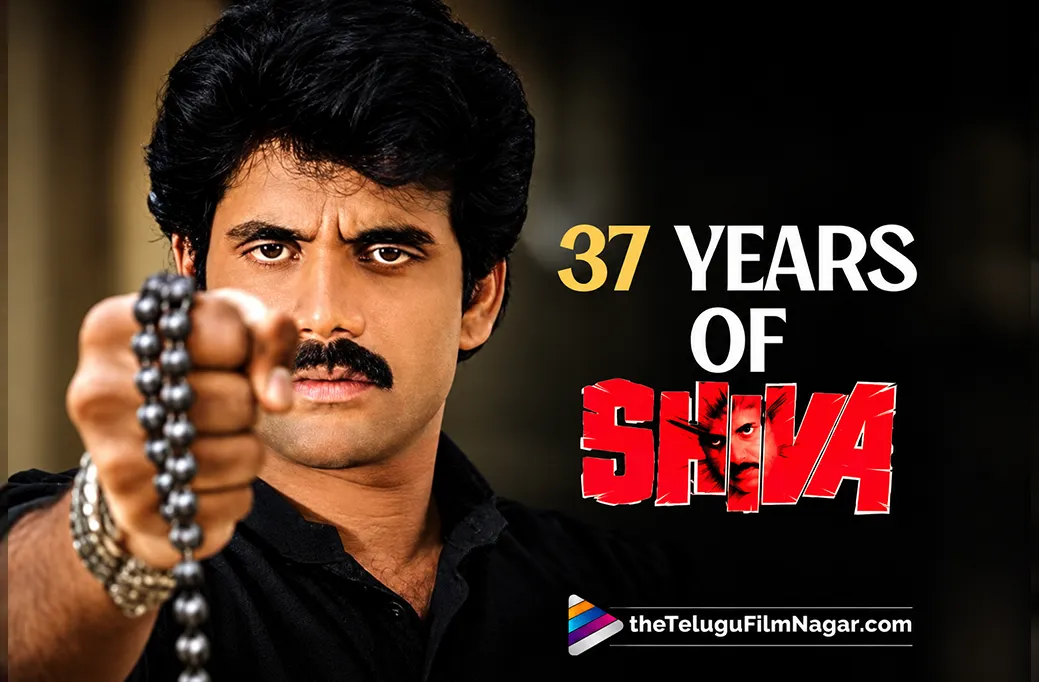
There are movies that remind us of a story, and then there are movies that remind us of a feeling. For many Telugu cinema lovers, Shiva is one such film. The sight of Nagarjuna walking into a fight, the sound of footsteps and the sudden appearance of a cycle chain are images that have stayed with audiences for decades. Released on October 5, 1989, Ram Gopal Varma’s Shiva did much more than become a hit. It changed the way Telugu cinema could look and sound.
Watching Shiva today can feel like stepping into a different era of filmmaking. The college setting, friendships and growing tension among the students give the film a lived-in quality. The violence never feels disconnected from the characters or their surroundings. Nagarjuna’s Shiva is not introduced as an invincible hero. He gradually takes a stand as the corruption and violence around him become impossible to ignore.
That approach is also what makes the action so memorable. The fights emerge naturally from the situations rather than feeling like separate hero-elevation sequences. The cycle-chain scene is the perfect example. Shiva has no conventional weapon, spots a cycle nearby and turns its chain into one. Something completely ordinary becomes one of the most iconic images in Telugu cinema.
The scene works because it feels physical and believable. The weight of the chain, the movements of the characters and the impact of every blow give the sequence an immediacy that was unusual for its time. Ram Gopal Varma’s camera keeps the audience close to the action, while the sound design gives even footsteps, chains and impacts added weight.
That filmmaking style extends beyond the fights. The locations, camera movement and everyday sounds create a world that feels raw rather than polished. Nothing seems designed merely to look larger than life. The film instead draws its intensity from the people, places and situations within it.
The performances complete that world. Nagarjuna brings a restrained intensity to Shiva, allowing his anger to build naturally. Raghuvaran’s Bhavani is an equally memorable presence, making the conflict feel genuinely threatening. Ilaiyaraaja’s music and background score add another layer to the film, strengthening both its tension and quieter moments.
More than three decades later, Shiva still feels remarkably immediate. Its college corridors, confrontations and unforgettable action have become part of Telugu cinema’s collective memory. Yet the film does not survive only because of nostalgia. Its filmmaking still carries the freshness that made it stand apart when it first arrived.
On its anniversary, Shiva is remembered as the film that announced Ram Gopal Varma as a filmmaker with a distinct voice and gave Nagarjuna one of his most iconic characters. More importantly, it showed that an action film did not need excessive spectacle to leave a lasting impact.
Perhaps that is why the cycle chain still means something to Telugu cinema audiences. It is more than a weapon from a famous scene. It represents the simple, grounded filmmaking instinct that made Shiva feel so different when it arrived, and why the film still feels special today.